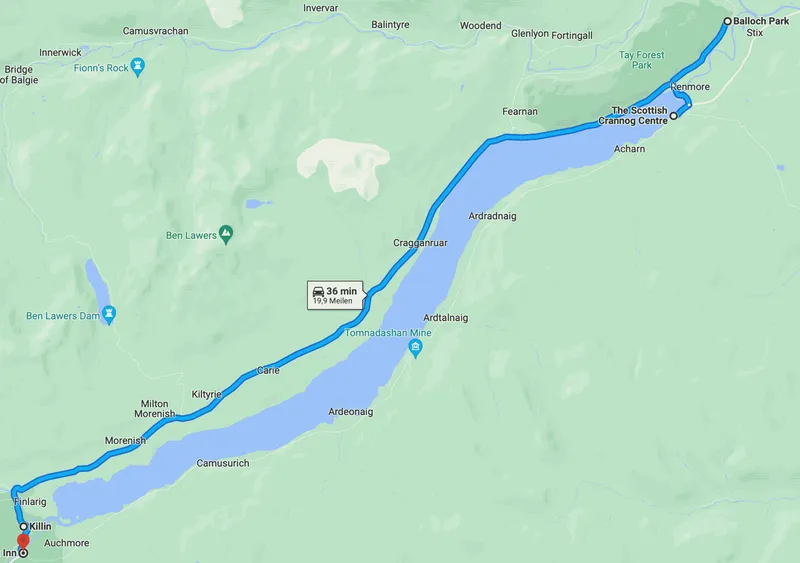
Wir sind heute für unsere Verhältnisse recht spät gestartet, denn wir haben uns erst gegen 10 Uhr auf den Weg gemacht. Nach ein paar Minuten mit dem Auto sind wir auch schon im Scottish Crannog Center direkt am Loch Tay angekommen.
Scottish Crannog Center
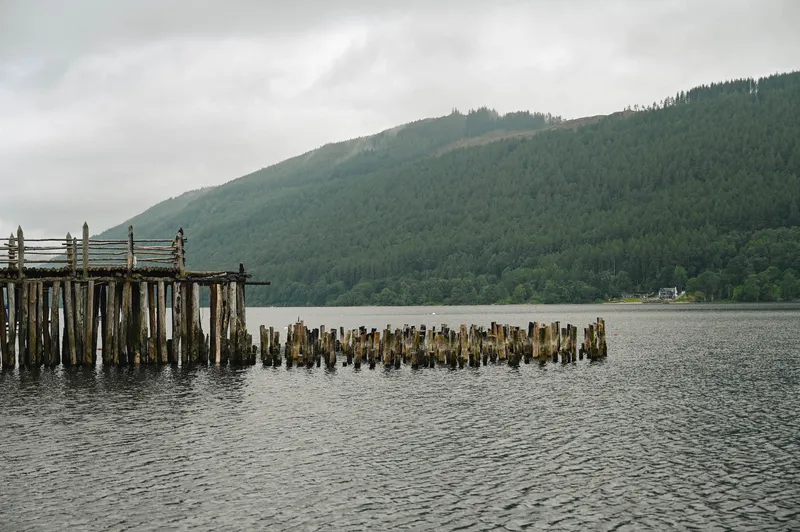
Erster Stopp ist heute das Scottish Crannog Center direkt am Loch Tay, für welches wir eine geführte Tour gebucht haben. Es ist ein guter Mix aus Geschichte und Mitmach-Sachen für die Kids. Im Moment sind wir die einzigen Gäste hier und werden von John durch die ersten Teile des Crannog Center geführt. Er erzählt und vieles rund um die Crannogs welche noch immer in Schottland verteilt stehen. Leider sehen wir hier nur noch die Stelzen, die aus dem Wasser ragen, denn das Crannog hier ist letztes Jahr abgebrannt.
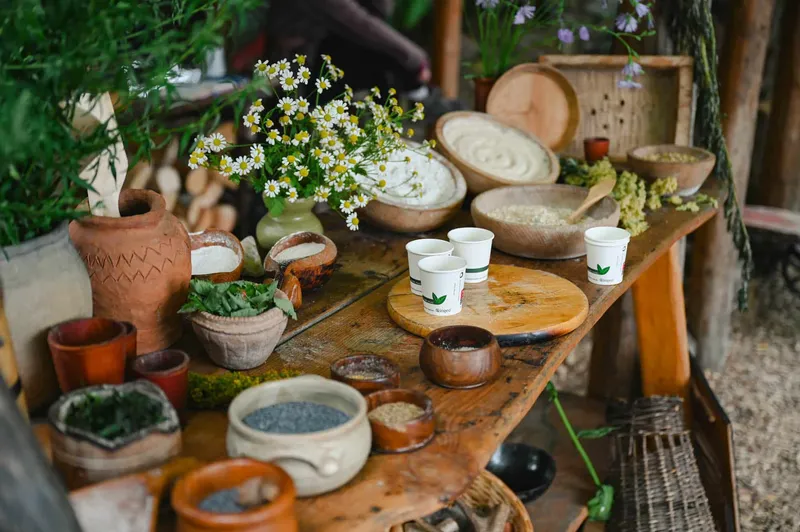
We then move on to the different stations where we can do pottery or drill holes in the stones using sand. Other stations include spinning threads, grinding grain with two stones, making tea with herbs, baking bread in the Dutch oven and a lot more. Finally, we come together in front of a campfire, write thoughts on a piece of paper and then throw it into the fire.
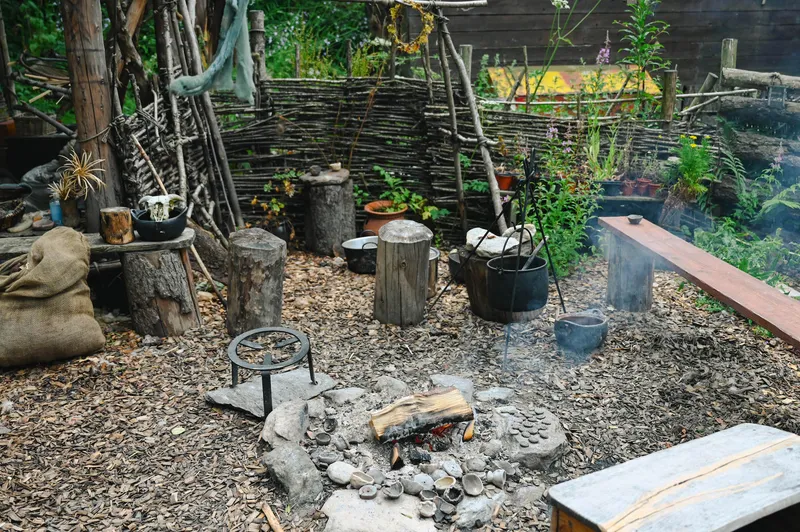
💡 Interesting facts about the Scottish Crannog CenterIn the past, 2,500 years ago, many people in Scotland lived on lochs in stilt houses built in the water near the shores of the lakes. Diese Rundhäuser auf Stelzen werden als „Crannog“ bezeichnet, in denen die Menschen während der Eisenzeit lebten, arbeiteten und zum Teil auch ihr Vieh beherbergten. Das „Scottish Crannog Center“ ist eine originalgetreue Rekonstruktion eines dieser Crannogs am Loch Tay und gleichzeitig ein Museum, welches altertümliche Funde präsentiert. Unfortunately, except for the piles in the water, it fell victim to a fire on June 11, 2021, but will be rebuilt.
The Scottish Crannog Center is funded primarily by donations and run by volunteers. The aim of the Scottish Crannog Center is to convey the way of life, the many skills and technologies of the past, as well as to maintain the finds from the Scottish crannog excavations and make them accessible to everyone.
There were many houses on stilts in the water in Scotland, but they are also said to have existed on Lake Constance. There are over 430 known places in Scotland where finds have documented crannogs. 18 crannogs have already been discovered in Loch Tay alone. The water level of Loch Tay can drop by up to 2.50 meters, which then makes some crannogs visible.
Im Loch Tay werden entsprechend der vielen Crannogs durch Taucher seit 1980 viele archäologische Artefakte gefunden, zum Beispiel Überreste von Langbooten, Werkzeugen, Baumaterialien oder Schmuckstücke. The “Scottish Crannog Center” not only exhibits these finds, but also clearly conveys the meaning and use of these artifacts. The Scottish Trust for Underwater Archaeology, based at Loch Tay, is responsible for the reconstruction of the Crannog, as well as for the underwater archeology in Loch Tay.
Continue to Killin
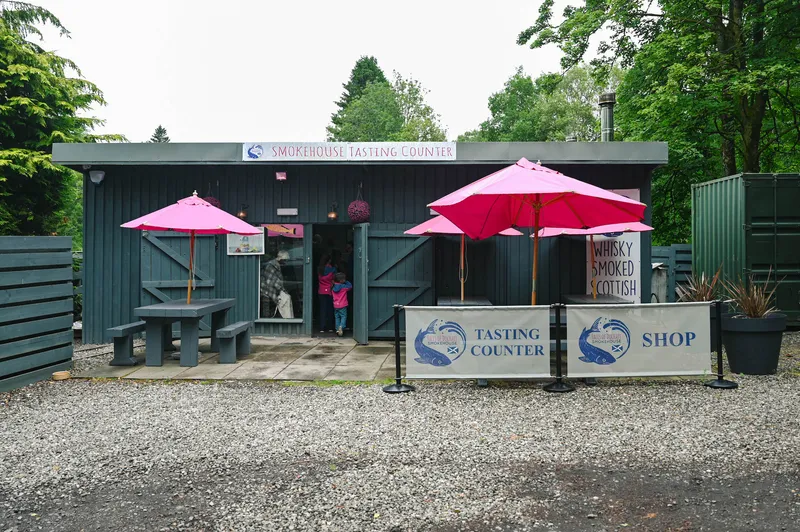
Nach dem Crannog Center sind wir überrascht, wie spät es bereits wieder ist und wir machen uns auf den Weg in Richtung Killin, wo wir zuerst im "Falls of Dochart Smokehouse" stop. As soon as we open the car door we know: We are definitely in the right place. How we missed the smoky scent in our noses. In this smokehouse, salmon is prepared both hot and cold smoked and we take a tasting plate. Wow! We are thrilled, all 4 of us. The price of the smokehouse is quite high, but the quality and taste really make up for it.

💡 Interesting facts about KillinThe small town of Killin with its 765 inhabitants is located in the Stirling council area and the traditional county of Perthshire. Two rivers flow through Killin - the River Dochart and the River Lochay. Both rivers flow into nearby Loch Tay. The village is a popular tourist base for tours in the surrounding mountains of Breadalbane, or for water sports activities on Loch Tay. Killin is also on the edge of the Ben Lawers National Nature Reserve and the Loch Lomond & The Trossachs National Park.
There are also some sights in the town and in the surrounding area. These include the Dochart Bridge, which dates from 1760 and is listed as an individual monument in the Scottish monument lists in Category A. Another bridge in Killin is the Dochart Viaduct, a railway bridge from 1885. The Dochart Viaduct is also included in Category A of the Scottish heritage lists.
Just outside Killin are the “Falls of Dochart”, which are the main attraction of Killin. They can be easily observed from Dochart Bridge. It is not a waterfall, but rather rapids. Near the “Falls of Dochart” is the building of a former watermill, which used water power to weave fabrics. Today it houses the “Breadalbane Folklore Centre” and offers an exhibition that provides information about the local history of the idyllic town of Killin.
Just below the “Falls of Dochart” there is the island “Inchbuie” in the middle of the rapidly flowing Dochart. The MacNab clan buried their dead on the island, which is still remembered today by the stone entrance gate and a monument.
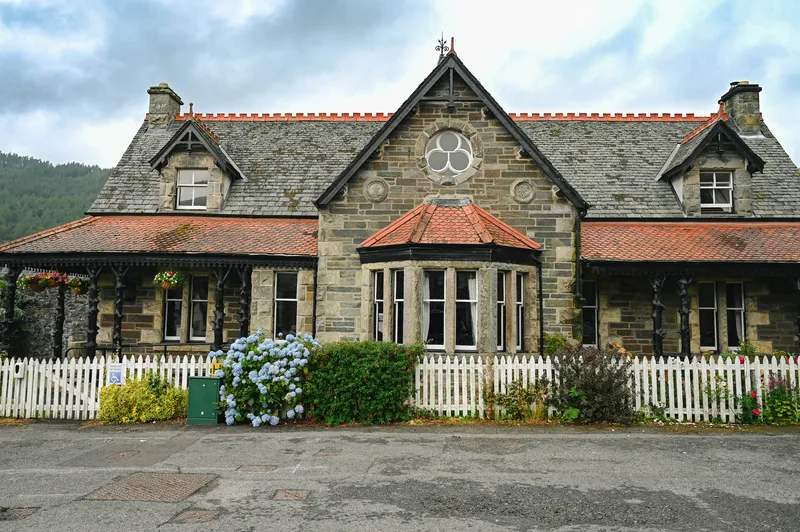
Falls of Dochart
Directly adjacent to the Smokehouse you can hear the rushing of the Falls of Dochart and they magically attract us again. Climbing around on the stones is always more exciting for the girls than any playground and it works really well here.
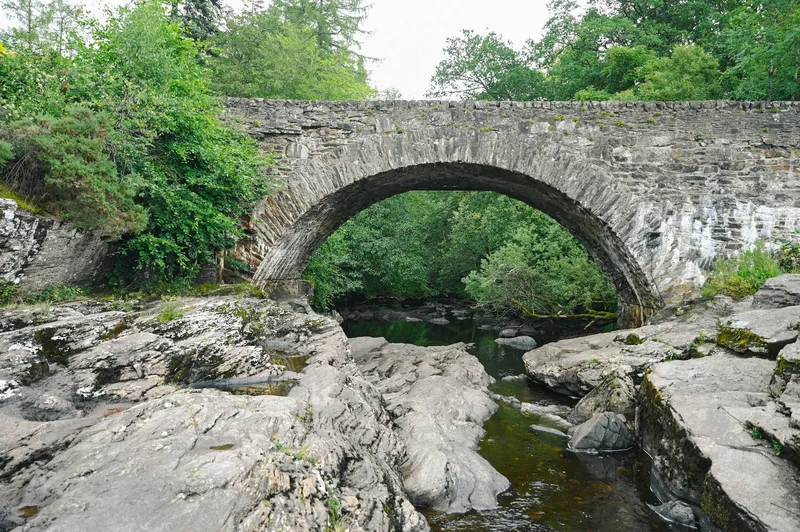
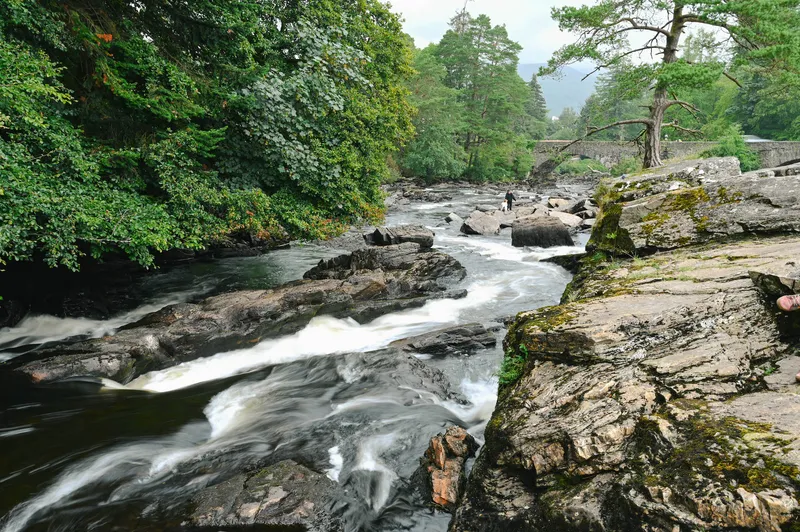
💡 Wissenswertes über die Falls of DochartDer River Dochart fließt von Loch Dochart nahe Crianlarich nach Killin und mündet kurz dahinter im Loch Tay. Auf der Strecke nach Killin breitet sich das Flussbett aus und das Gefälle nimmt stetig zu. Viele Felsen im Flussbett zwingen das Wasser darüber oder daran vorbei zu fließen, wodurch die Strömungsgeschwindigkeit erheblich zunimmt und die „Falls of Dochart“ bilden. Sie gehören zu den eindrucksvollsten Falls in Schottland und sind sehr bequem zu erreichen. Besonders lohnenswert ist der Blick auf die „Falls of Dochart“ von der Dochart Bridge.
Der Dochart entwässert das Gebiet der Ostseite von Ben Lui und die Nordseite von Ben More. Im Ort Killin wird der Dochart enger und durch vier Kanäle unterschiedlicher Größe der Dochart Bridge geleitet, die den Fluss überquert. Sie wurde 1760 gebaut, jedoch fielen große Teile der Brücke einer Flut zum Opfer, sodass sie 1831 neu hergerichtet wurde.
Weiter stromabwärts teilt sich das Wasser des Dochart um die Insel Inchbuie, welche nach dem Bau der Dochart Bridge zur Insel, die Heimat des Clans MacNab Ende des 17. Jahrhunderts wurde. Die Insel wurde von den MacNab zur Bestattung ihrer Toten benutzt. Innerhalb der Einfriedung befinden sich 15 Gräber, wovon 9 die letzten Ruhestätten der Clan-Häuptlinge sind. Eine weitere Grabplatte aus dem Mittelalter deutet darauf hin, dass auch zuvor und ohne eine Brücke hier schon zumindest eine Bestattung vollzogen wurde.
Shopping & Spa
There isn't much left to do for the rest of the day today, we drive back to our house via Aberfeldy and get groceries at the Co-op. Packed with a good supply, we arrive at our lodge, stow our things, turn on a machine with laundry and hop back into the hot tub in a light Scottish drizzle before eating and playing a little more together. 👋🏼