
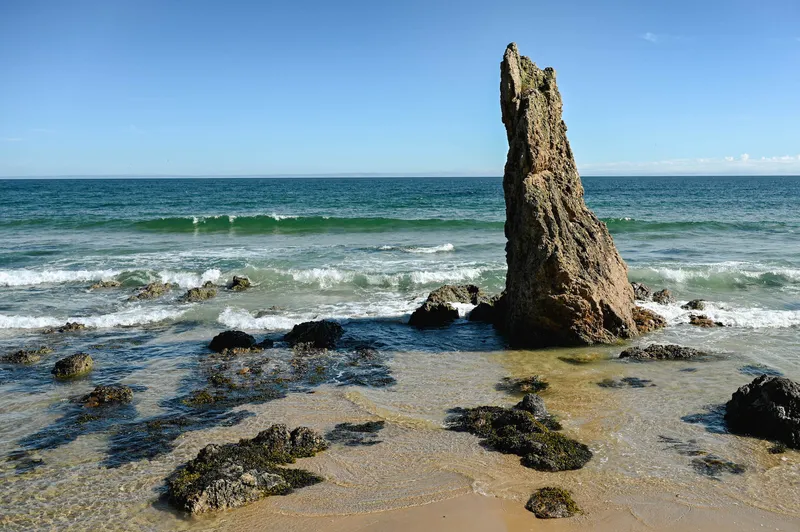
We're starting the day today with a super sunny morning. The weather forecast says 27 degrees and we are really looking forward to the day at the beach or to the port town of Cullen. It takes us a little over an hour to get there, so that's okay. The girls are really relaxed about their time in the car and alternate between chatting, reading and playing a few games on their iPads.
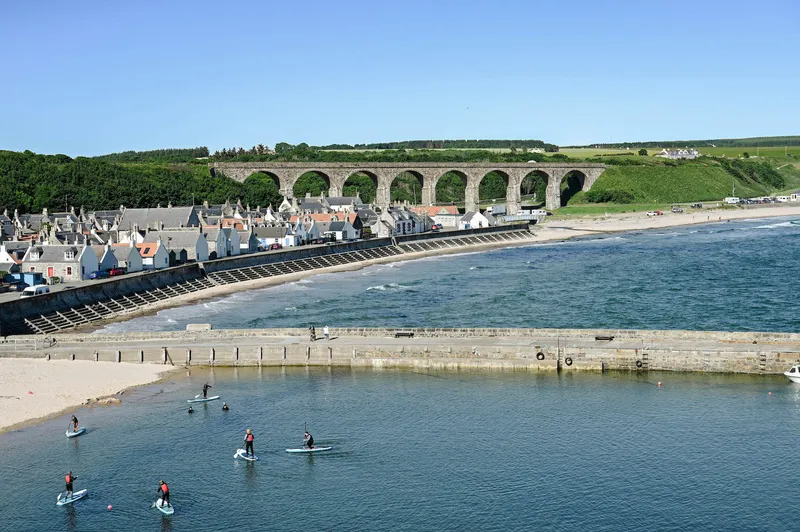
The port city of Cullen
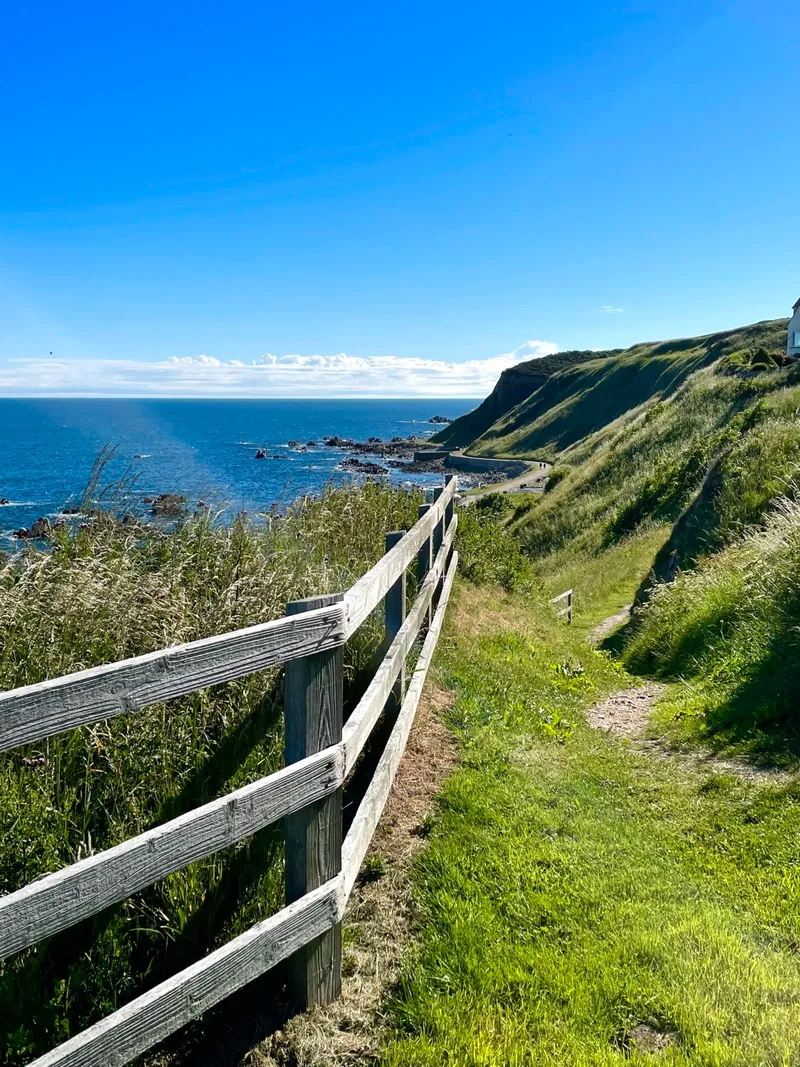
Port city of Cullen
Cullen fascinates us from the first sight. You can reach the city via a good connection and come down from the mountain. The view of the sea is simply breathtaking. We park along Hafenstrasse and set off on foot to explore the beach.
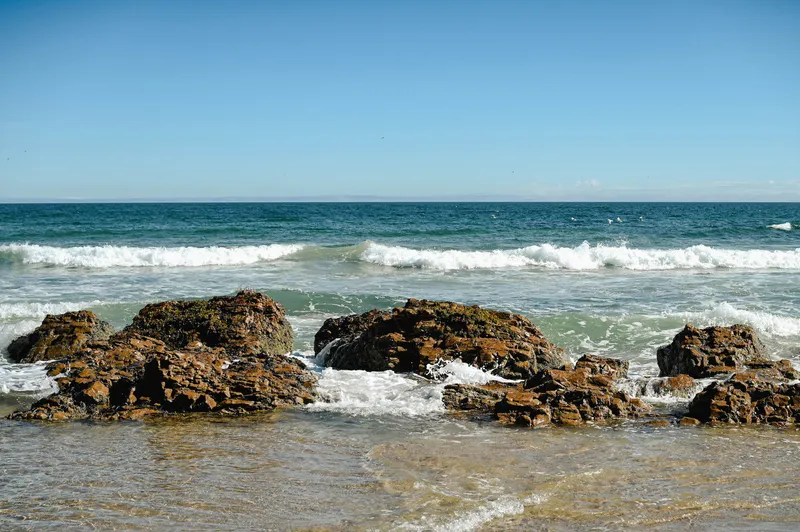
For the Scots it is basically midsummer and the siege of the beach begins in the morning. 🙂 For us, with this strong and still quite fresh wind, it was unimaginable to lie down on a towel here in swimwear. By midday it gets really warm and the wind also becomes pleasant.
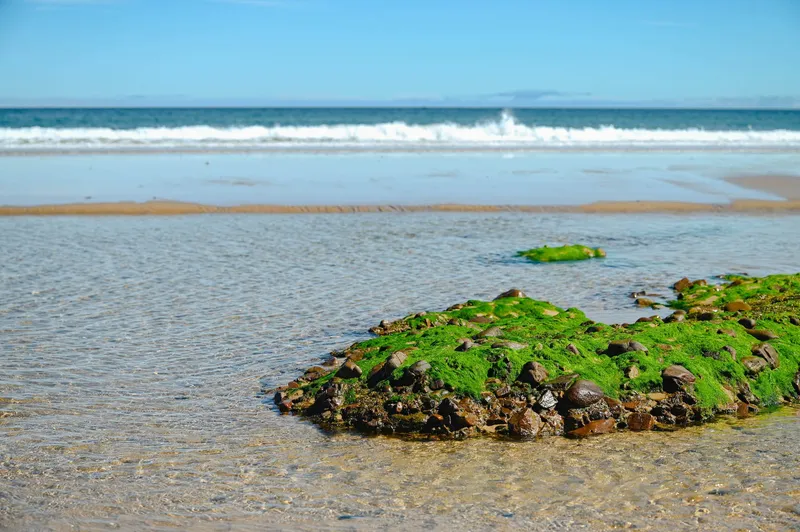
The beach takes forever to walk along and we continue on to the stones. This is an ideal place to take a break and have a little picnic. We really enjoy this view here and are really happy about the great weather we are enjoying here.
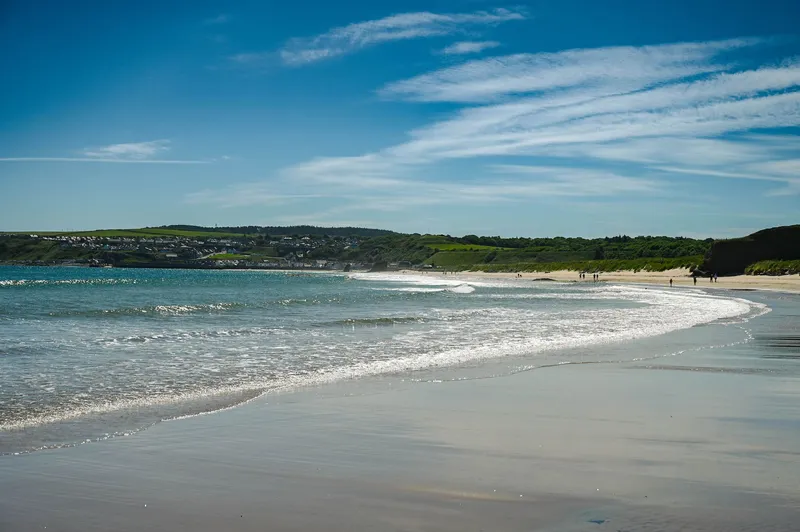
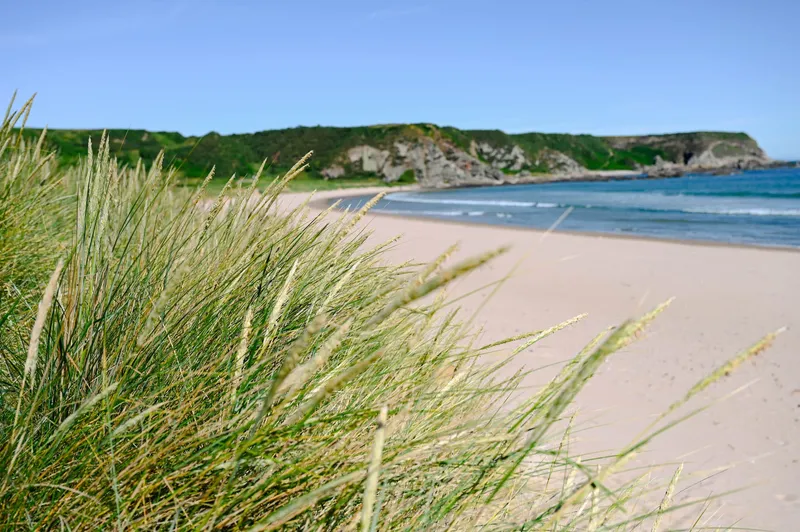

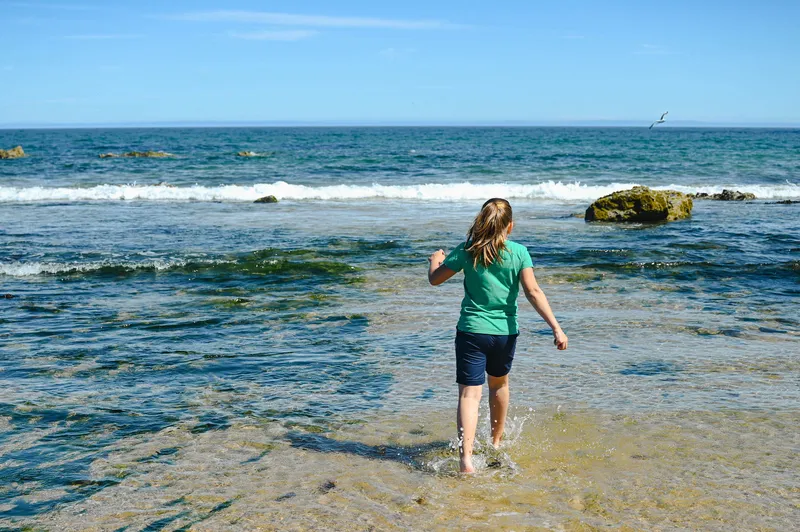
The water is still extremely cold. But Vera has been wanting to be able to put her feet in for days and we're happy to make that happen today. We spend the whole morning on the beach and explore the different areas. Of course we also find tons of shells and rhinestones.
💡 Interesting facts about the harbor village of CullenCullen is located east of the Scottish council area of Moray. The town of Cullen is located on the southern bank of the “Moray Firth” and has around 1,475 inhabitants. The small fishing town is very famous for its fish soup, which is called “Cullen Skink”. Cullen consists of two districts (Seatown and Upper Town) with many shops and a market square worth seeing. In Upper Town you can admire some old stone houses built into the hill. Very close to Cullen is the “Cullen Old Church” from the 13th century, classified as a Scottish monument of the highest category A.
A few steps separate Upper Town from Seatown, the port of Cullen. Cullen has a wide sandy beach directly behind the rocks known as the “Three Kings”. Cullen Beach is located in front of the Cullen Golf Course and Cullen Bay is well protected by the surrounding cliffs. With a bit of luck, bottle-nose dolphins can be seen playing in the bay. Also worth seeing is the “Cullen Pet Cemetery”, a pet cemetery with a view of the coast that was specially created by loving pet owners.
The Cullen Burn Viaduct railway bridge is impressive, but you won't find a train station in Cullen. Many of the city's attractions are closely linked to the history of the Earls of Findlater. For example, “Findlater Castle” and the earls’ later residence, “Cullen House”. There is hardly anything left of “Findlater Castle” today. All the more so for the “Cullen House”, which, together with three other buildings on the property, was included in the highest monument category A.
Crovie Viewpoint
Our next stop on today's tour is the small coastal village of Crovie. There is a very good viewpoint here where you have a great view of the sea and Crovie itself. If you want, you can also have a perfect picnic in the sun here.
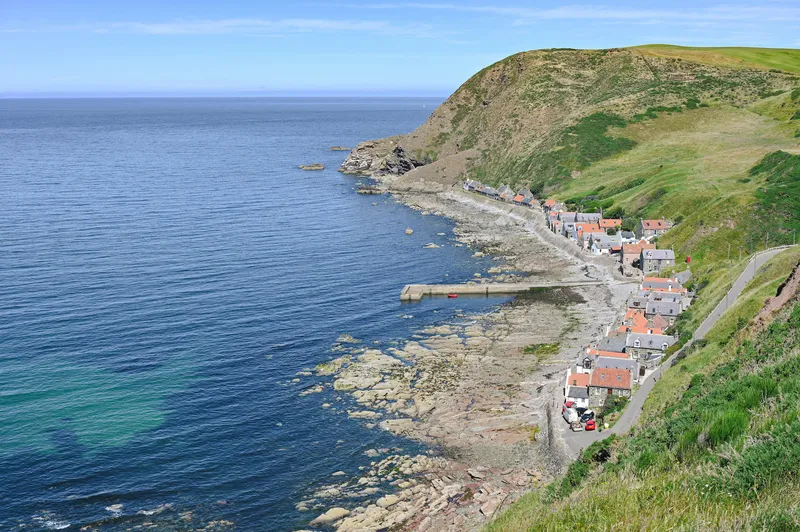
View of Crovie from the cliffs
💡 Things to know about CrovieCrovie is a former small fishing town in Aberdeenshire on the north-east coast of Scotland. On the narrow strip of coast almost at sea level there are some houses worth seeing, which are now practically preserved in their original condition. Crovie is one of the few places in Scotland where you can still admire the best-preserved fishing villages on the coast.
Just behind the narrow coastal strip is the steep cliff, making Crovie accessible only by footpath and not by car. The houses stand on a ledge of the cliff and were built in terraced terrain.
Originally, many workers and their families settled in Crovie, who were displaced from their previous homes in the Highlands by the “Highland Clearances”. For a long time they lived from fishing and selling the fish, but over time this brought in less and less. Then in 1953 a storm devastated the entire town, causing most of the residents to emigrate. The remaining residents then converted the houses into holiday homes, which still have a great fascination for guests today due to their special location.
If you want to visit Crovie by car, you should leave your vehicle on the hill and use the footpath with a breathtaking view. The place is also very interesting for bird watchers with its steep cliffs to observe kittiwakes and puffins in their natural environment.
The Galley Whitehills Waterfront Cafe & Fish Restaurant
At lunchtime we look for a restaurant again. This doesn't turn out to be that easy today, as it feels like pretty much all the bars are closed today. It's not entirely clear to us why on Sunday, but along the coast we find the town of Whitehills and get a table in the "Galley Whitehills Waterfront Cafe & Fish" restaurant. In addition to fish & chips, there is also very good bruscetta and scampi here.
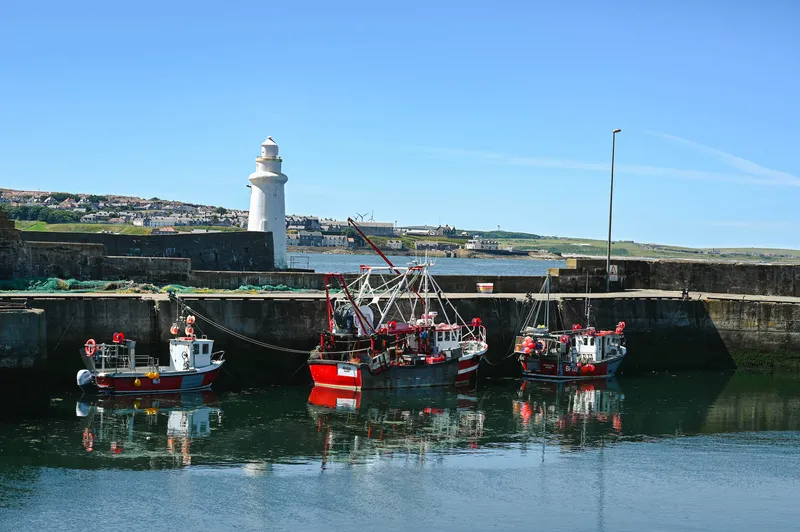
Whitehill
A sign with “Playground” takes us to a great adventure playground right on the coast with a view of the sea and a large freighter lying off the coast. The playgrounds here are all really ingenious and have completely different structures.
Balvenie Castle
On the way back to the house we turn off to Balvenie Castle, which is located directly behind the Glenfiddich whiskey distillery in Dufftown. Dufftown is the closest town to our house and we visit here quite often at the moment. This week we want to explore Dufftown in more detail and take a leisurely tour. It feels like we've only seen the distilleries here so far. 😂
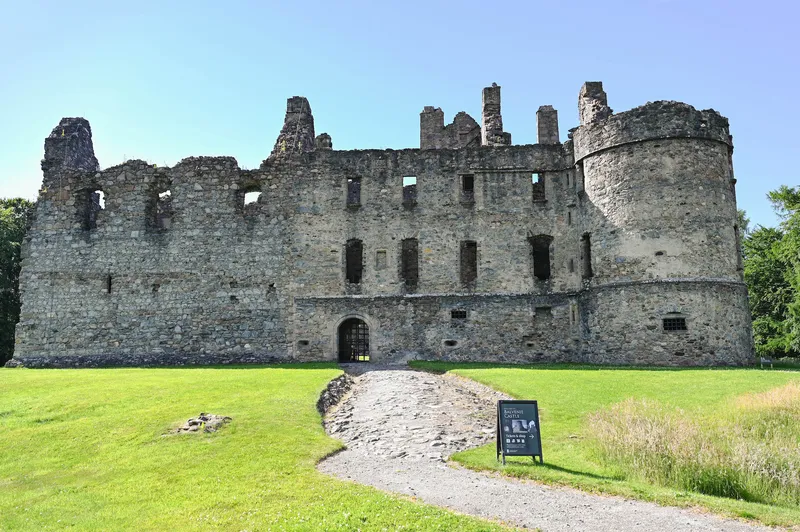
The Balvenie Castle
💡 Interesting facts about Balvenie CastleThe ruins of Balvenie Castle are located on the edge of Dufftown in the Moray region. It was built in the second half of the 12th century and is one of the oldest stone castles in Scotland. Balvenie Castle has been expanded repeatedly over the centuries. Today, three different construction phases can be clearly assigned in time.
The circular wall, which is up to 2 meters thick and approx. 6 meters high, dates back to the 13th century. It served to protect the approximately 40 by 50 meter inner courtyard, which has an approximately rectangular shape. On the tops of the walls you can still see the battlements from where the enemy attackers were repelled. They also had to overcome a moat that was between 9 and 12 meters wide and surrounded the entire castle. Today, however, this ditch is largely filled.
The remains of the foundations of a one-story building in the south of the castle complex can be dated to the 15th century. It housed the kitchen, a small brewery and a storage room. A staircase led to the two-story west wing of the castle.
In the 16th century, Balvenie Castle was rebuilt for ceremonial purposes and maximum convenience. Due to the lack of battlements, very large windows and only a few arrow slits, the castle lost a lot of its defenses.
Today Balvenie Castle is an impressive castle ruin of large proportions. The history and the individual construction phases of the castle are explained in great detail and clearly. Various functions and rooms are well marked and you quickly get an impression of the impressive dimensions of the individual rooms, even in the multi-story areas that are still preserved.
Caring for animals
We make it back to our accommodation just on time so we can help look after the animals. For Vera, it is a highlight every day to look after the youngest resident, who is just 3 months old, by feeding him with a bottle.
We are of course trying to adapt our tours this week to the feeding times, because how often do you have the opportunity to live in the middle of this small farm and help out.
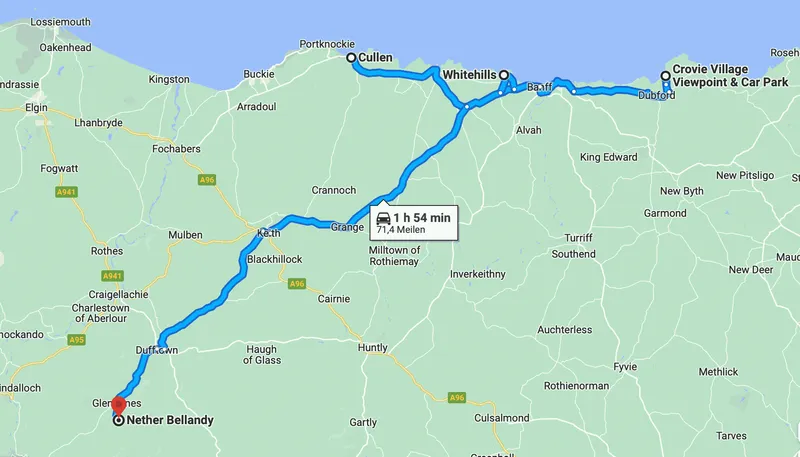
Route Day 9:
Conversations along the way
Approved comments from the original article, in their original language.
[…] also wieder mal zu Fuß quer durch einen Golfplatz. 🙈 Erinnert uns ein wenig an den Golfplatz in Cullen als wir in die Bucht wollten. Diesmal kommen wir aber „legal“ durch den Golfplatz, denn […]